Presentation Work in Transition:
AI as Accelerator, Accessibility as Standard, Strategy as Value
If you work in presentations, you’ve probably felt it — the ground shifting under our feet. At the recent State of the Presentation Industry event, the conversation wasn’t just about slides or tools. It was about what’s really changing in our work and how we, as presentation professionals, can stay ahead.
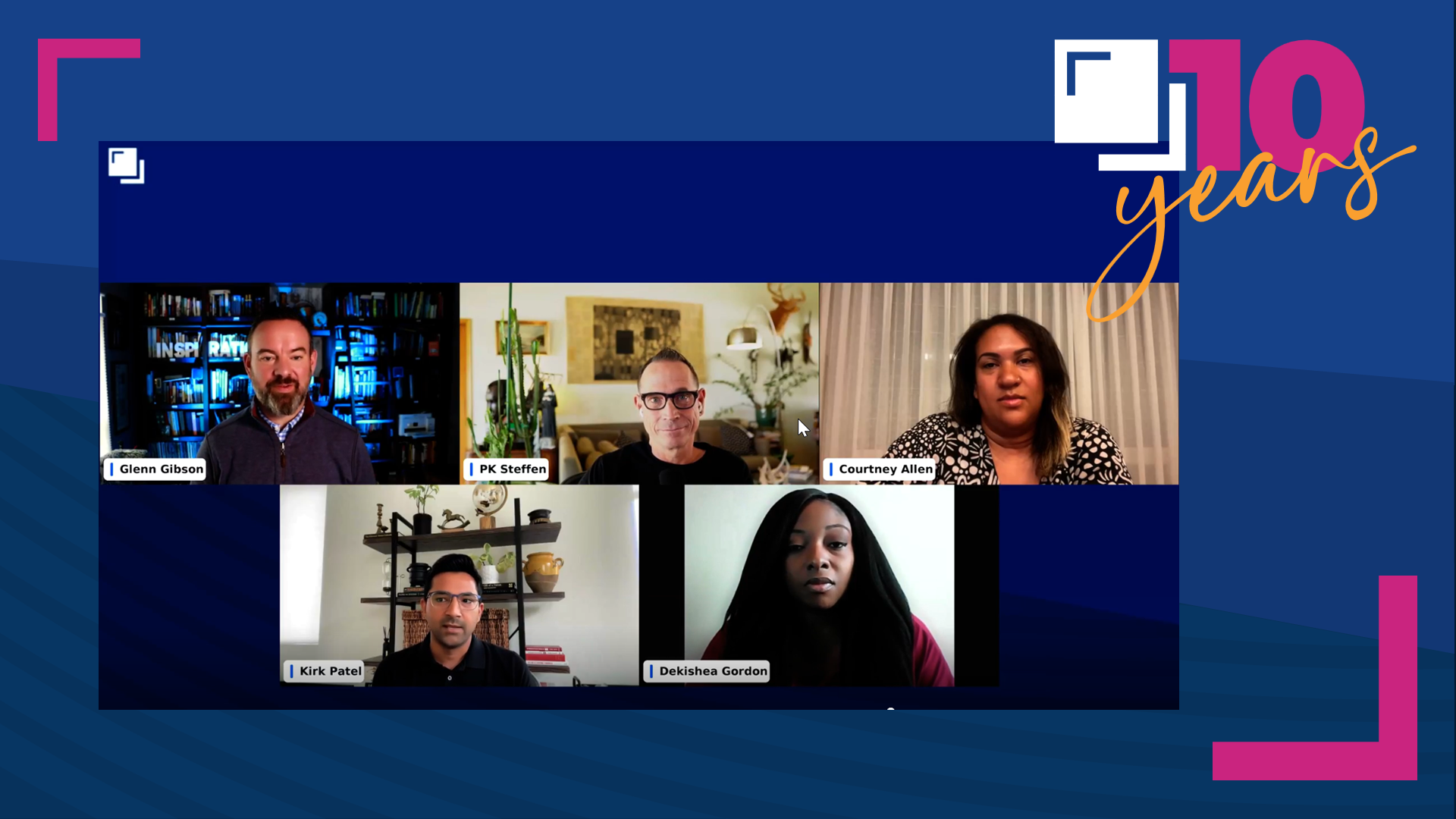
This session was hosted by Glenn Gibson, Principal Advisor and Presentation Coach at Hyland, who guided a dynamic panel of industry voices: Dekishea Gordon, an expert in simplifying complex technical content; Courtney Allen, known for her work in design systems and accessibility; PK Steffen, a leader in data-driven communication and storytelling; and Kirk Patel, who bridges business strategy with presentation design. Together, they brought deep, hands-on experience and a forward-looking perspective to where our profession is headed.
AI Is Here — But It’s Not Taking Over
We can’t ignore it anymore: AI is speeding things up. Drafting slides, summarizing calls, shaping storylines — what used to take hours can now happen in minutes. That’s exciting, but it also means expectations are higher. If anyone can use AI to get a “good enough” first draft, what makes our work valuable?
The answer isn’t to compete with the machine — it’s to go where AI can’t. Strategy. Storytelling. Judgment. Helping presenters feel confident and helping organizations get their message right. AI can accelerate the process, but it still needs a human who understands the audience, the business, and the bigger picture.
“The misconception is that AI will take our jobs; it’s actually evolving our industry.” — Dekishea Gordon
Accessibility Is Becoming the New Normal
Another big theme: accessibility isn’t optional anymore — and that’s a good thing. It’s a sign of respect for every audience and a way to make our work more inclusive and professional.
Think color contrast that works for everyone, captions that help people follow along, alt text that makes content usable for screen readers, and images that reflect the people you’re talking to. These practices aren’t just checkboxes; they’re how we show we care about communication that reaches everyone. And, bonus, they help take the heat out of subjective design debates by giving us clear standards to follow.
“Accessibility is the language of respect.” — Courtney Allen
Data Storytelling Needs More Than Slides
Presentations aren’t just a deck anymore. They’re part of a bigger communication package — what you show live, what you leave behind, and sometimes even motion graphics or interactive visuals.
The key is deciding what belongs where. What’s essential to land in the room? What needs a deeper dive later? What data really moves the decision forward? Great data storytelling doesn’t mean cramming everything onto a slide; it’s about making the evidence clear and convincing in the moment and easy to revisit afterward.
Our Roles Are Evolving — And That’s Exciting
If there’s one message to take away, it’s this: the job of a “slide maker” is fading. The future belongs to people who help shape ideas, influence decisions, and drive communication strategy.
That might mean specializing — maybe you’re the template expert, the data storyteller, the presentation coach, or the tech systems pro. Or it might mean carving out a new role entirely, showing your organization how presentations drive alignment, revenue, and speed. Many of the most successful professionals aren’t waiting for those jobs to exist — they’re creating them.
The Bottom Line
The tools are evolving fast. Standards like accessibility are rising. AI is changing how we work, but not replacing the value we bring. What matters most now is the human side of our craft: making meaning, building confidence, and helping ideas land with impact.
For those of us who love presentations, this is an exciting time. The work is becoming more strategic, more creative, and more influential. Our challenge — and our opportunity — is to lean into that future: use AI as an accelerator, embrace accessibility as a given, and show how great presentation strategy drives real business results.
“We have to stop being ‘beautifiers’ and step into strategic communication.” — Kirk Patel